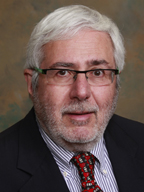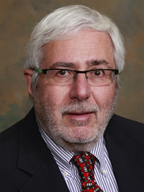
Philip Rosenthal, M.D.
- Professor of Pediatrics and Surgery Director of Pediatric Hepatology Research Director, Pediatric Hepatology

Contact Information
| Academic Office Room MU 415, Box 0136 University of California, San Francisco San Francisco, CA 94143-0136 (415) 476-5892 (415) 476-1343 Fax [email protected] |
Education
1967-71 State Univ. of N.Y. at Albany, Albany, NY, B.S. Magna Cum Laude, Biology
1971-75 State Univ. of N.Y. Downstate Med. Ctr. Brooklyn, NY, M.D. Magna Cum Laude
Residencies
- 1975-76 Albert Einstein/Bronx Mun. Hosp., NY, Intern Pediatrics
- 1976-78 Albert Einstein/Bronx Mun. Hosp., NY, Resident Pediatrics
Clinical Expertise
- Acute Liver Failure
- Biliary Atresia
- Bioartificial Liver Support
- Choledochal Cyst
- Cirrhosis
- Hepatitis B
- Hepatitis C
- Hepatocellular Carcinoma (Liver Cancer)
- Live Donor Liver Transplantation
- Liver Transplantation
- Neonatal Hepatitis
Biography
Philip Rosenthal, M.D. is Professor of Pediatrics and Surgery, Medical Director of the Pediatric Liver Transplant Program. and Director of Pediatric Hepatology at UCSF. Rosenthal completed his medical training at Downstate Medical Center and the Albert Einstein Medical Center in New York. He then completed a fellowship in pediatric gastroenterology at UCSF. He joined the UCSF faculty in 1995 after serving as Professor of Pediatrics at University of California, Los Angeles (UCLA).
A pediatric hepatologist at the UCSF Benioff Children's Hospital, Rosenthal is internationally renowned for the care of children with liver disease, including liver cancer, and those undergoing liver transplantation. In addition, Rosenthal has and currently serves as Principal Investigator on numerous clinical trials to improve the care of patients with pediatric liver disease.
Rosenthal has won numerous honors for his research including work on the pharmaceutical treatment of hepatitis B and C, genetics and immunology of biliary atresia and the quality of life after liver transplants in children. He is a consultant to organizations such as the American Liver Foundation, Parents of Kids with Infectious Diseases, Alagille Syndrome Alliance, Studies of Pediatric Liver Transplantation (SPLIT), Centers for Disease Control and Prevention (CDC) and the National Institutes of Health (NIH). He is also on editorial boards and a regular reviewer for leading professional journals.
Awards & Honors
Research Overview
Rosenthal is pursuing research on the pharmaceutical treatment of hepatitis B and C, genetics and immunology of biliary disease, use of bioartificial liver support utilizing porcine hepatocytes for patients with fulminant liver failure, as well as researching the quality of life following liver transplantation in children.
Clinical Research
Rosenthal is principal investigator on numerous clinical trials including the following:
- Tenofovir Alafenamide (TAF) in Adolescents With Chronic Hepatitis B Virus Infection
- NAFLD Pediatric Database 2
- A Study to Evaluate Treatment of Hepatitis C Virus Infection in Pediatric Subjects
- A Study to Evaluate the Pharmacokinetics, Safety, and Efficacy of Glecaprevir/Pibrentasvir in Pediatric Subjects With Genotypes 1-6 Chronic Hepatitis C Virus (HCV) Infection
Research & Funding
- Optimal chemopreventive regimens to prevent malaria and improve birth outcomes in UgandaSponsor: NIH/NIAIDSponsor ID: U01AI141308Funding Period:Apr 2020-Mar 2025Co-Principal Investigator
- Childhood Liver Disease Research Network (ChiLDReN) - UCSF (CC)Sponsor: NIH/NIDDKSponsor ID: U01DK062500Funding Period:Sep 2002-May 2024Principal Investigator
- Mechanisms of varied sensitivity of P. falciparum field isolates to the antimalarial drug pipelineSponsor: NIH/NIAIDSponsor ID: R01AI139179Funding Period:Jun 2018-May 2023Principal Investigator
Publications
MOST RECENT PUBLICATIONS FROM A TOTAL OF 398
- Boster JM, Goodrich NP, Spino C, Loomes KM, Alonso EM, Kamath BM, Sokol RJ, Karpen S, Miethke A, Shneider BL, Molleston JP, Kohli R, Horslen SP, Rosenthal P, Valentino PL, Teckman JH, Hangartner TN, Sundaram SS, Childhood Liver Disease Research Network (ChiLDReN). Sarcopenia is associated with osteopenia and impaired quality of life in children with genetic intrahepatic cholestatic liver disease. Hepatol Commun. 2023 11 01; 7(11). View in PubMed
- Schwarzenberg SJ, King WC, Ling SC, Murray KF, Mogul D, Rosenthal P, Rodriguez-Baez N, Teckman J, Schwarz KB, Hepatitis B Research Network (HBRN). Change in Health-related Quality of Life in Youth with Chronic Hepatitis B Living in North America:A 5-year Cohort Study. J Pediatr Gastroenterol Nutr. 2023 Sep 27. View in PubMed
- Conrad MD, Asua V, Garg S, Giesbrecht D, Niaré K, Smith S, Namuganga JF, Katairo T, Legac J, Crudale RM, Tumwebaze PK, Nsobya SL, Cooper RA, Kamya MR, Dorsey G, Bailey JA, Rosenthal PJ. Evolution of Partial Resistance to Artemisinins in Malaria Parasites in Uganda. N Engl J Med. 2023 Aug 24; 389(8):722-732. View in PubMed
- Roh ME, Zongo I, Haro A, Huang L, Somé AF, Yerbanga RS, Conrad MD, Wallender E, Legac J, Aweeka F, Ouédraogo JB, Rosenthal PJ. Seasonal Malaria Chemoprevention Drug Levels and Drug Resistance Markers in Children With or Without Malaria in Burkina Faso: A Case-Control Study. J Infect Dis. 2023 10 03; 228(7):926-935. View in PubMed
- Rosenthal PJ. Proteasome inhibitors: The next generation of antimalarial drugs? Cell Chem Biol. 2023 05 18; 30(5):413-415. View in PubMed
- View All Publications
In the News
- UCSF Transplant Surgery - December 28, 2012Alfonso Garcia and his parents pose with the UCSF medical team that cared for him during his 2010 life-saving liver transplant. From left: mother Marta Garcia; Emily Perito, MD; nurse practitioner Susan Diaz, MSN; Garcia; Philip Rosenthal, MD; and father Oscar Garcia. Alfonso Garcia still carries around a baseball cap that belonged to a 22-year-old man who passed away in 2010 having never met him. But the cap is just a small token of an even bigger reminder that the 18-year-old college [...]

- UCSF Transplant Surgery - October 01, 2001UCSF Medical Center staff performed the biopsy and told us the next day that William had a condition called biliary atresia, which is the closure or absence of some or all of the major bile ducts. That evening William had surgery to assess the damage to his liver and to open bile ducts. Later, during clinic visits with Dr. Phil Rosenthal (pictured left) and pediatric nurse practitioner and Liver Transplant Coordinator Chris Mudge, we learned about a relatively new procedure call a living [...]